Precision Laser Cutting
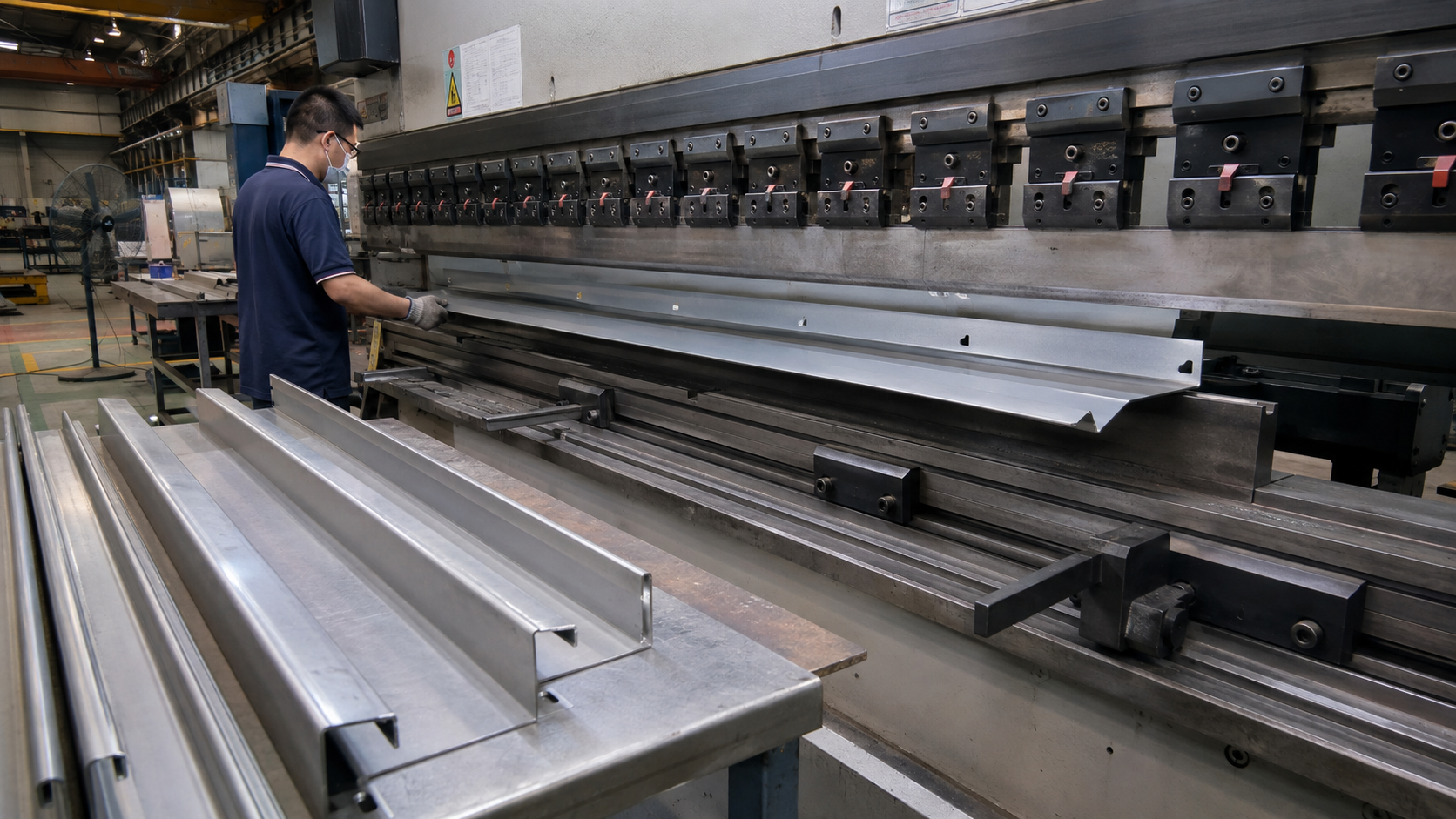
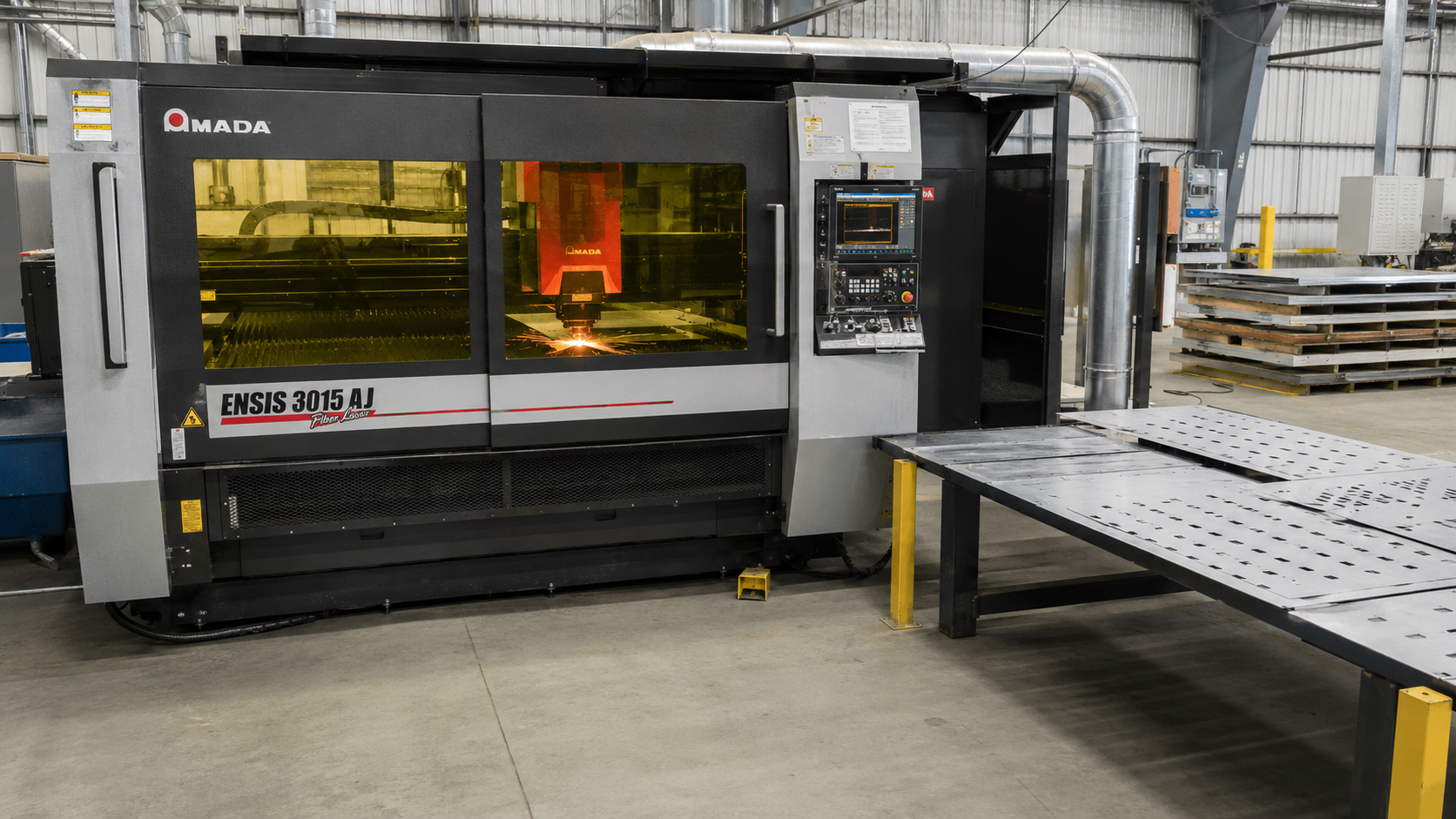
Steel plates and structural components are cut according to approved drawings, providing a consistent dimensional foundation for subsequent bending and assembly.
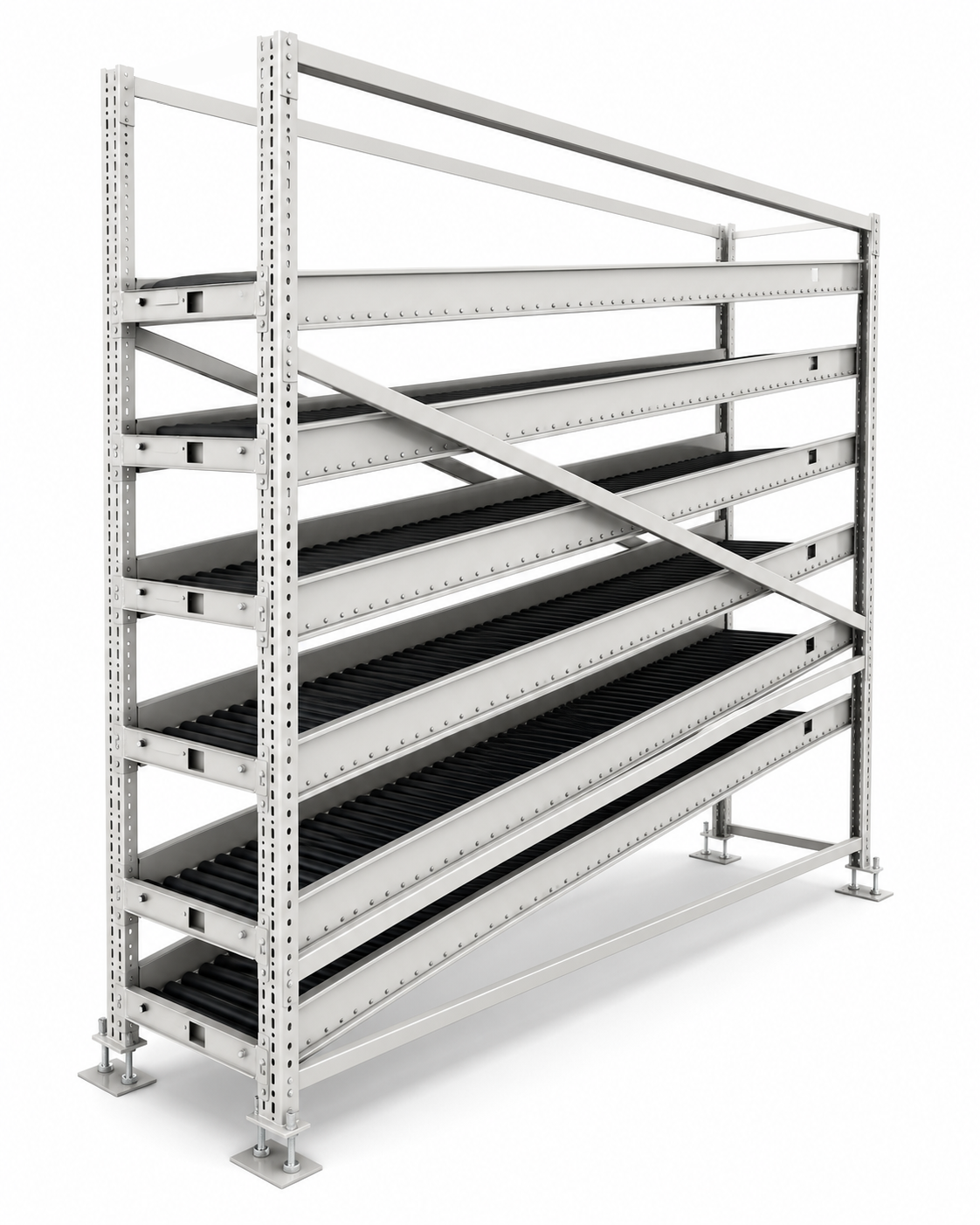
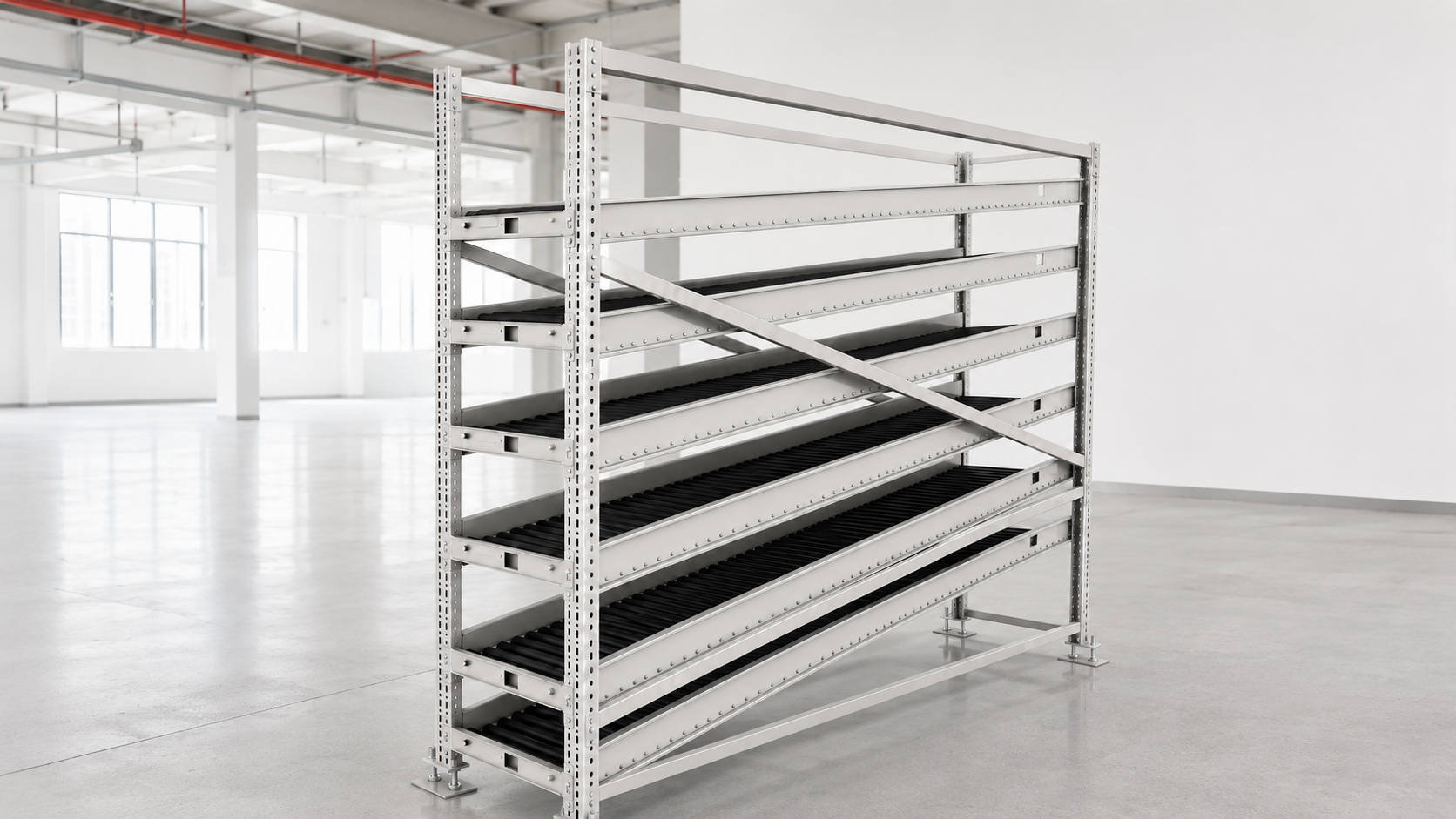
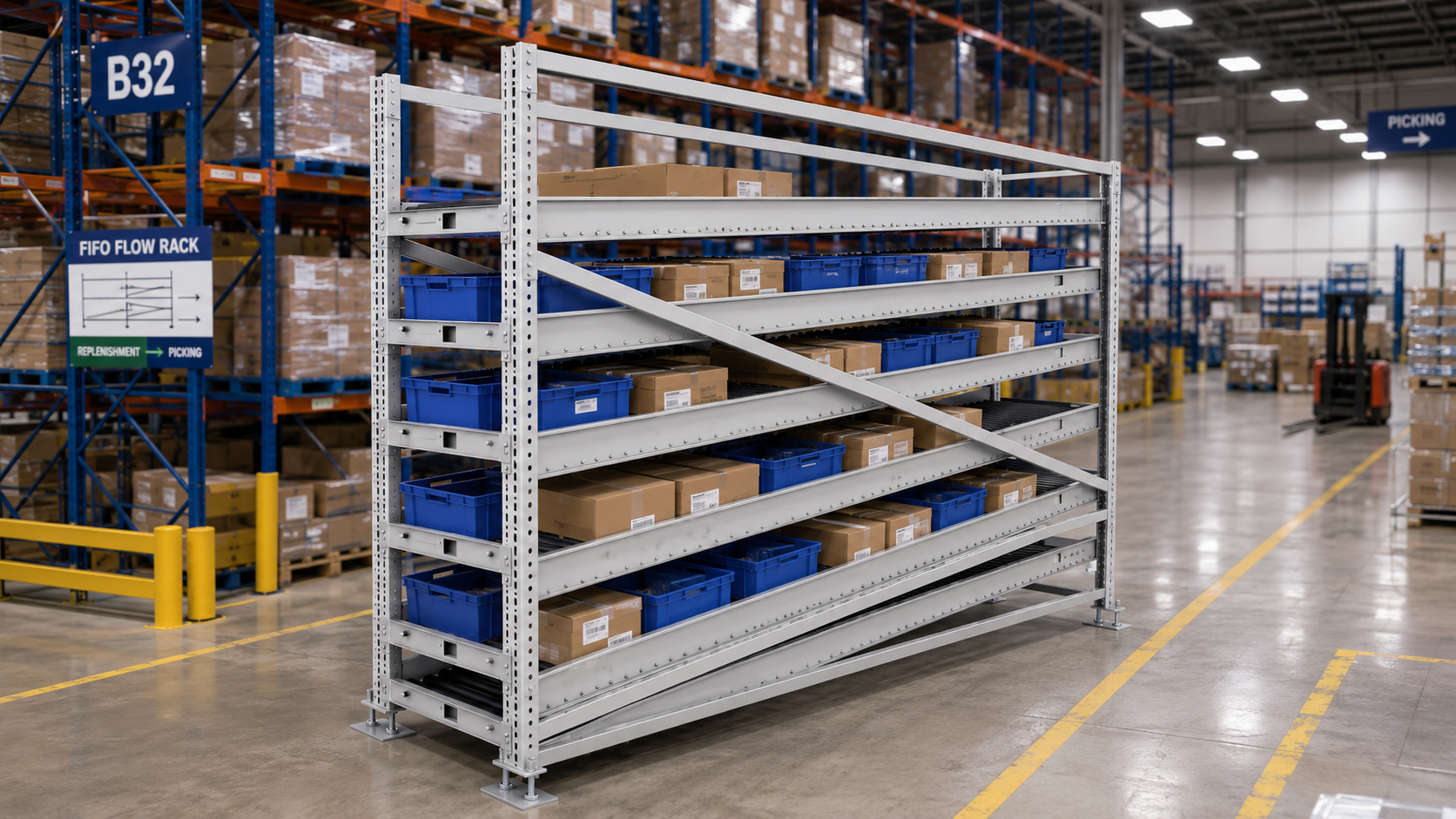
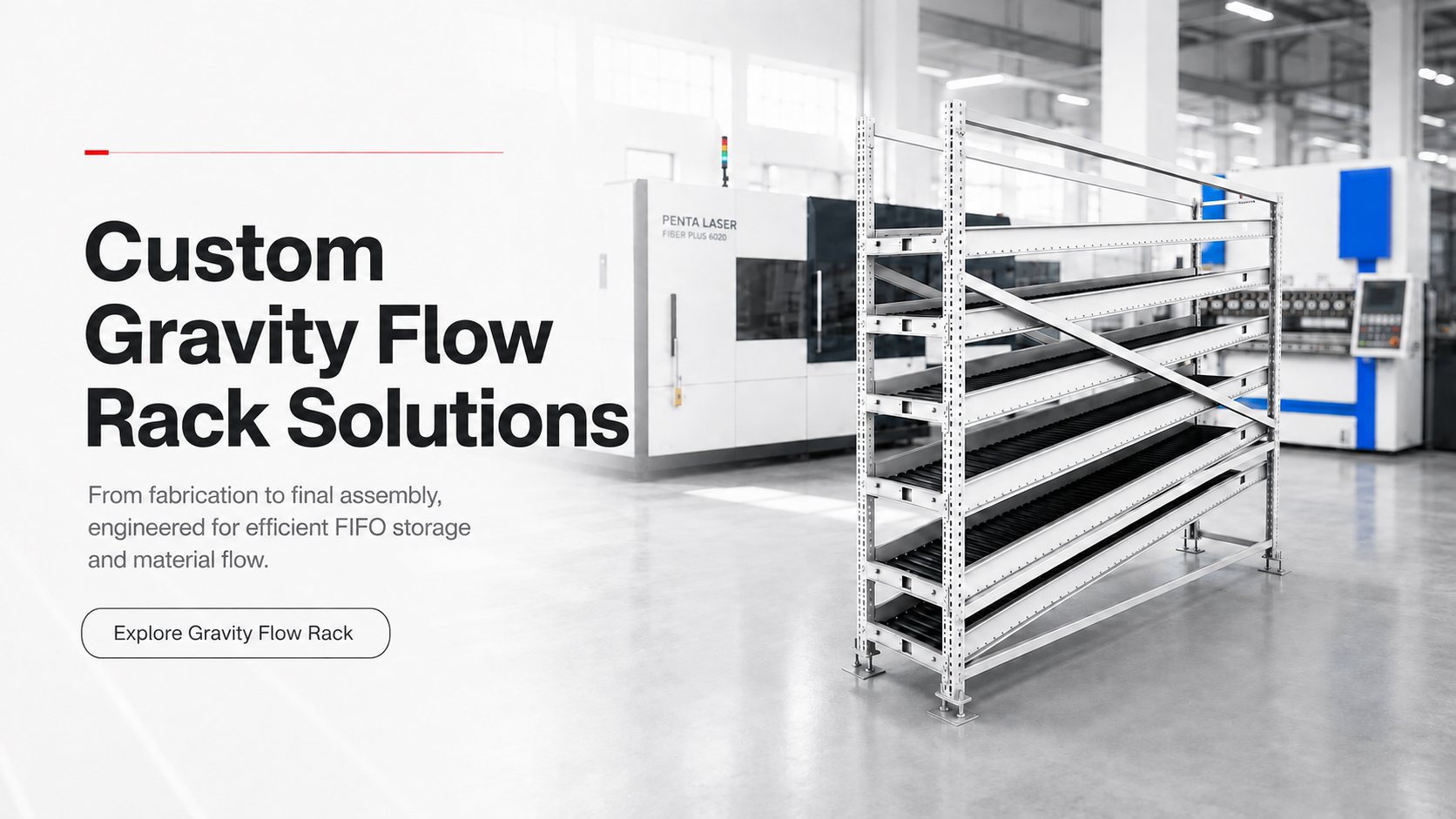
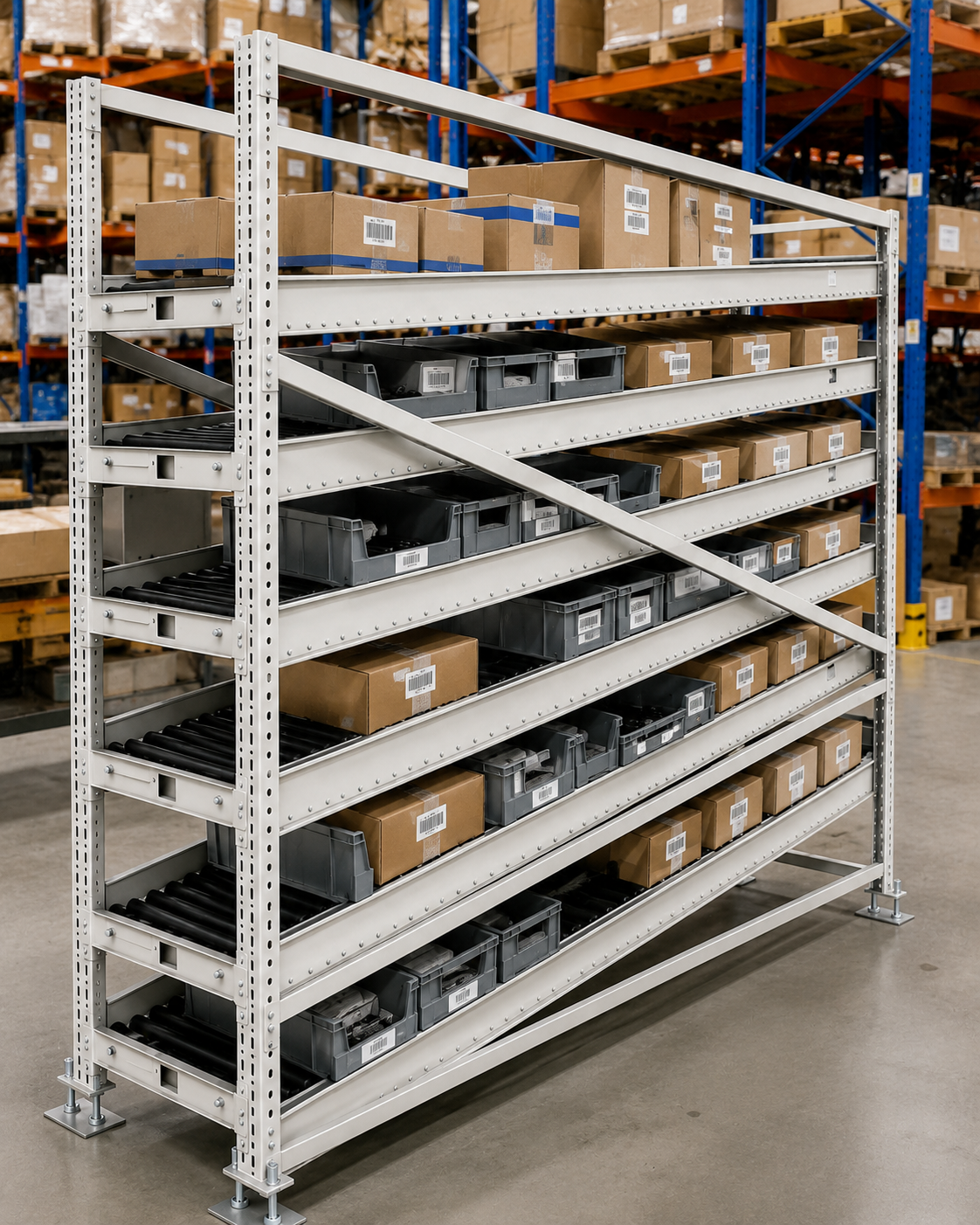
Gravity flow racks use inclined roller lanes to move cartons, bins and containers automatically from the loading side to the picking side. The system supports FIFO inventory management while improving picking efficiency, material visibility and space utilisation.
Materials move forward automatically in loading order, supporting first-in, first-out inventory management.
Containers remain accessible at the picking side, reducing unnecessary searching, walking and manual handling.
Multi-level and multi-lane configurations make better use of warehouse, production and line-side storage areas.
Rack dimensions, lane width, roller pitch, inclination and load capacity can be configured around your containers and workflow.
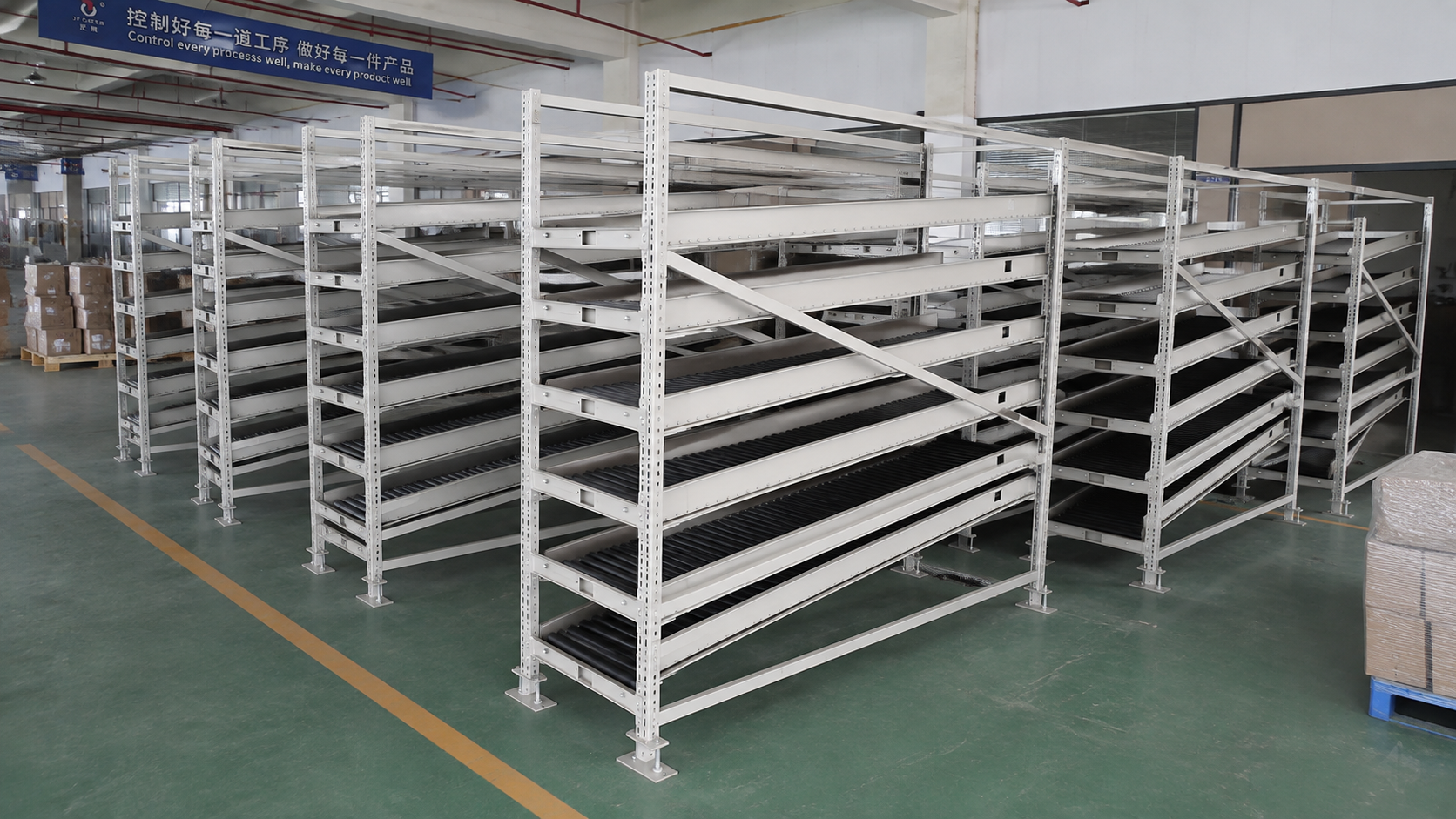
Key fabrication, surface treatment and assembly processes are coordinated to maintain dimensional consistency, structural stability and reliable batch delivery.
Steel plates and structural components are cut according to approved drawings, providing a consistent dimensional foundation for subsequent bending and assembly.
Uprights, beams and connection components are formed to the required profiles to maintain dimensional accuracy and assembly compatibility.
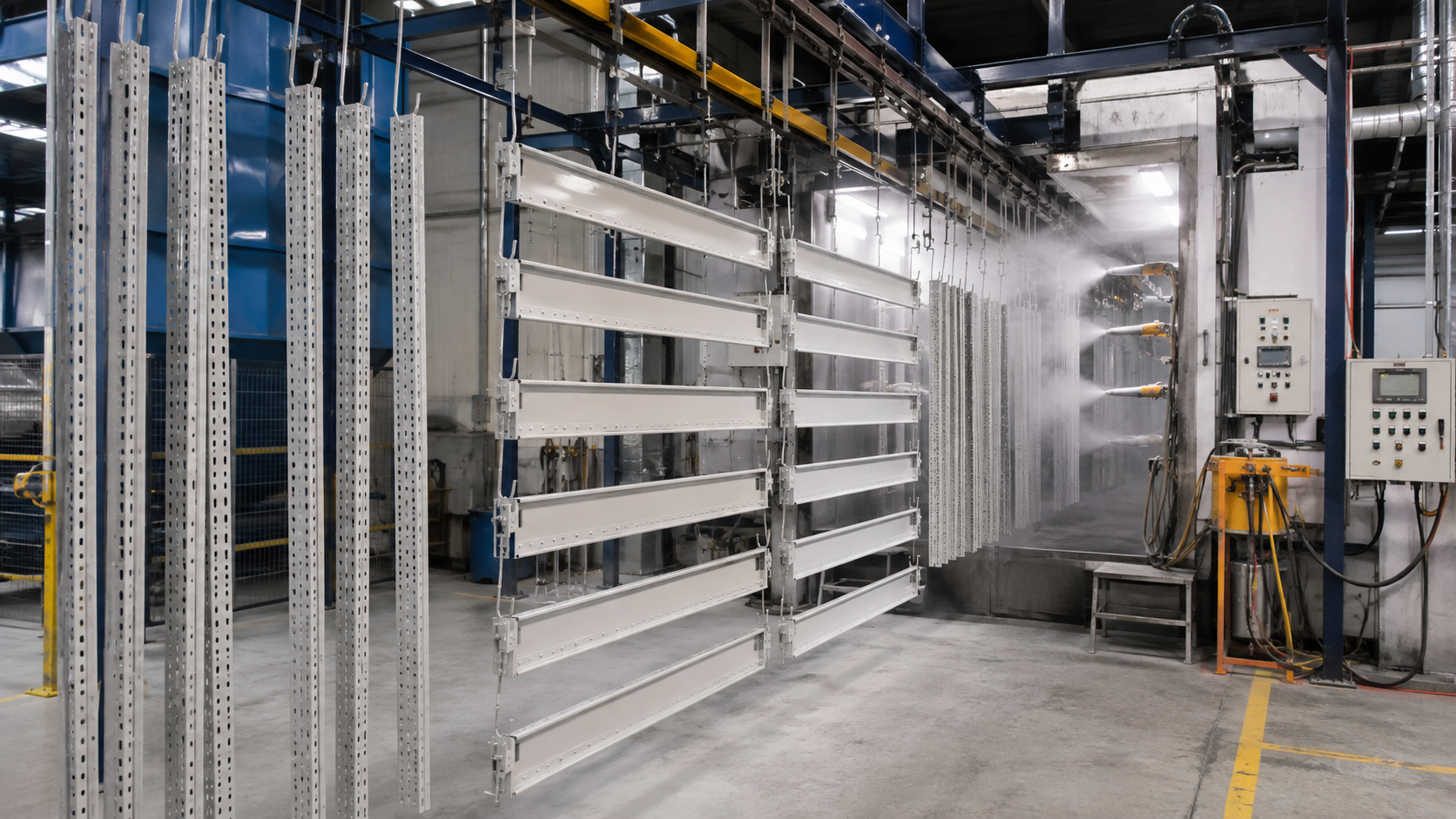
Steel components undergo surface preparation and powder coating to improve appearance and surface protection, with colour options available for project requirements.
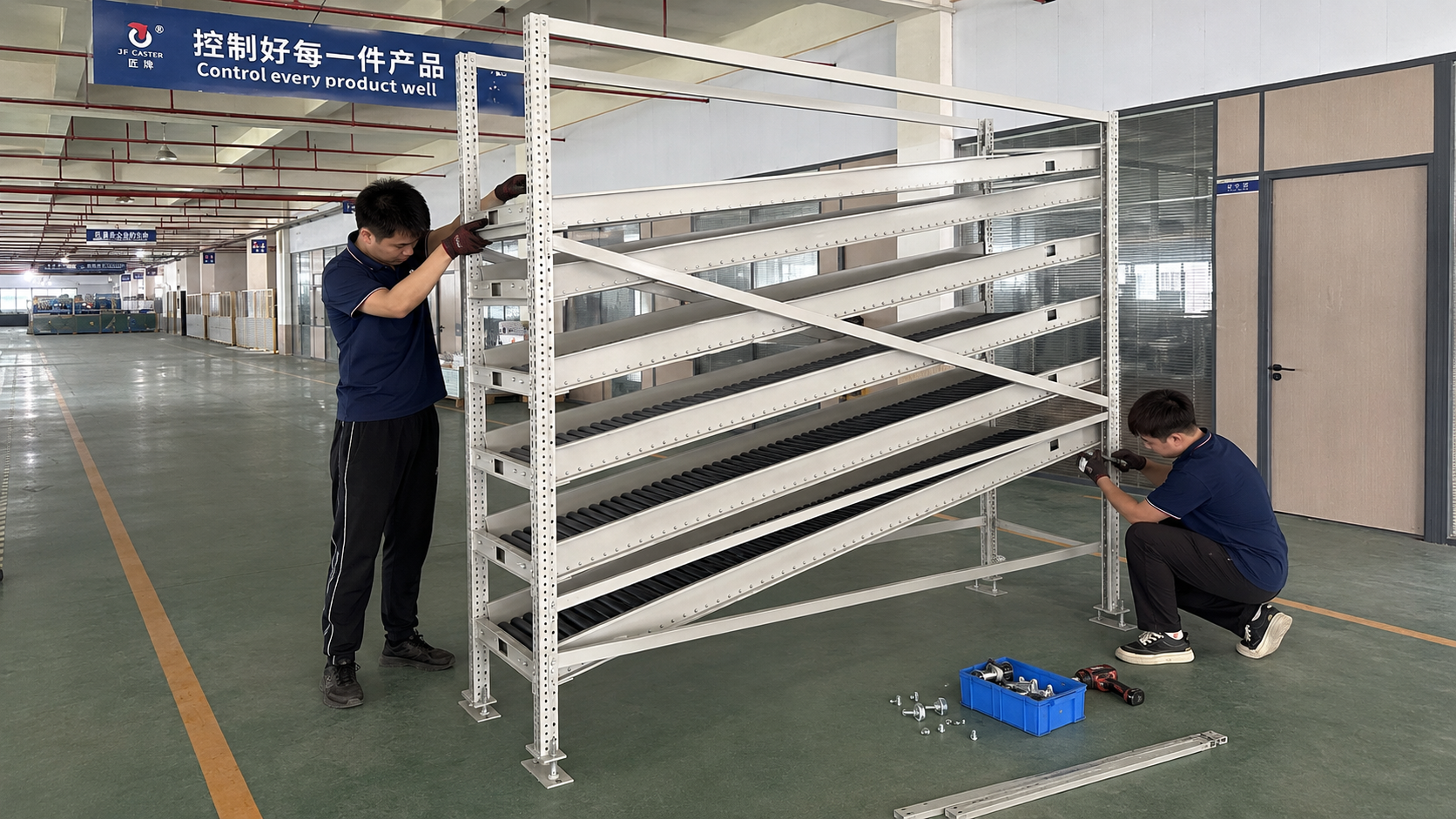
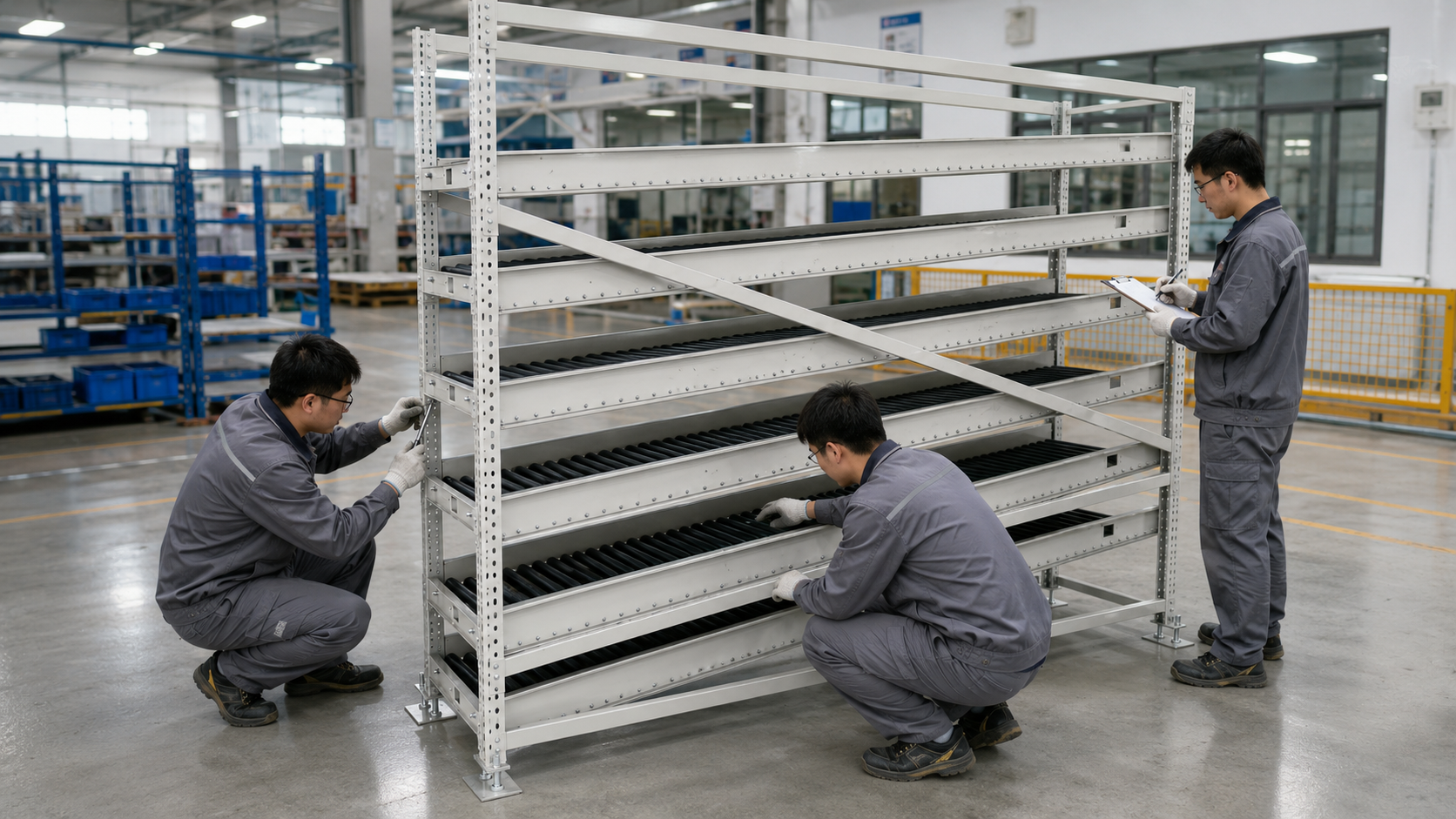
Roller lanes, frame components, guides and stops are assembled according to the confirmed configuration, followed by dimensional, surface and movement checks.
From roller lanes and structural connections to cross bracing and floor mounting, each detail is configured around container movement, load requirements and daily operating conditions.
Roller pitch, lane width and inclination are configured according to container size, weight and required flow performance.
Perforated uprights and adjustable connection positions support flexible level heights and lane arrangements.
Diagonal cross bracing improves lateral stability and helps maintain frame alignment during daily operation.
Base plates and adjustable feet support floor fixing, levelling and on-site installation.
Container dimensions and base structure
Lane load and overall capacity
Loading and picking direction
Rack dimensions, roller lanes, load capacity and structural details are configured according to your containers, material flow direction, installation space and operating requirements.
Container Size
Container Weight
Required Quantity
Rack Layout
Load Requirement
Flow Direction
Gravity flow racks support organised storage, replenishment and picking across warehouses, production lines and parts handling areas.
Inclined roller lanes support first-in, first-out material rotation for cartons, bins and containers.
Materials remain visible and accessible near assembly and production workstations, supporting faster replenishment.
Multi-level lane layouts support organised picking, temporary parts storage and material buffering.
Warehouse storage and replenishment
Assembly and production line supply
Parts picking and temporary buffering
We coordinate drawing confirmation, production preparation, assembly, inspection, packing and delivery around the requirements of each gravity flow rack project.
Container dimensions, load conditions, rack layout, installation space and required quantity are reviewed before configuration.
Rack dimensions, roller lanes, structural details and installation requirements are confirmed before production begins.
Components are fabricated, surface-treated and prepared according to the confirmed project configuration and production plan.
Dimensions, structural connections, roller movement and overall assembly are checked before packing and release.
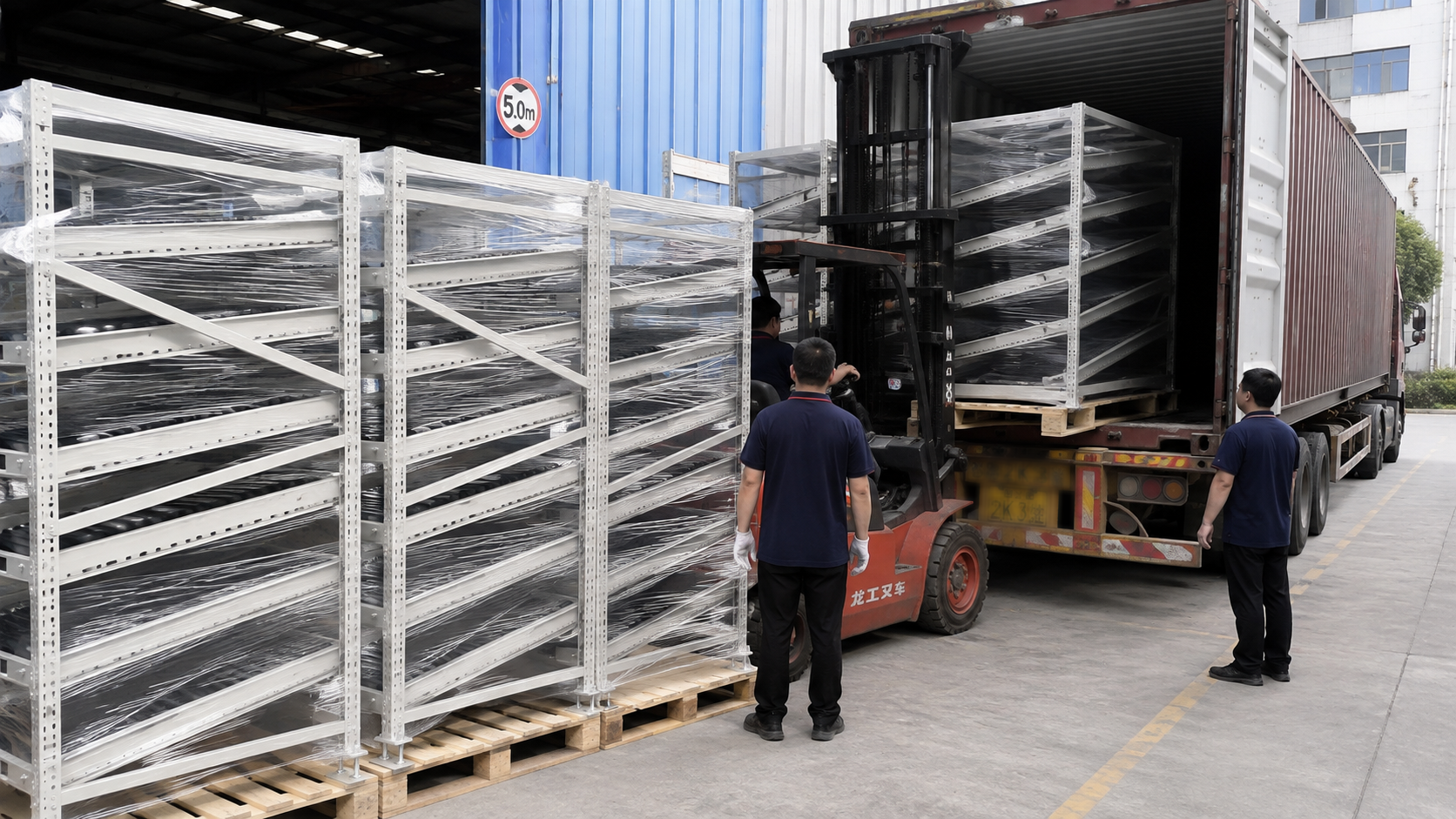
Racks or components are packed according to transportation, project delivery and on-site installation requirements.
Rack structures and roller lanes are assembled according to the confirmed project layout.
Key dimensions, connections and roller movement are checked before release.
Packing is coordinated around shipment, handling and installation requirements.
Production follows the confirmed rack configuration.
Key dimensions and assembly details are controlled by batch.
Packing plans are matched to shipment and handling conditions.
Project information can be prepared for on-site installation.