
Integrated Servo Wheels & Hub Motors for AGV/AMR
Compact AGV motor and integrated servo hub-motor solutions for AGV, AMR and service-robot platforms, with engineering selection support for torque, speed, wheel load, voltage and control requirements.
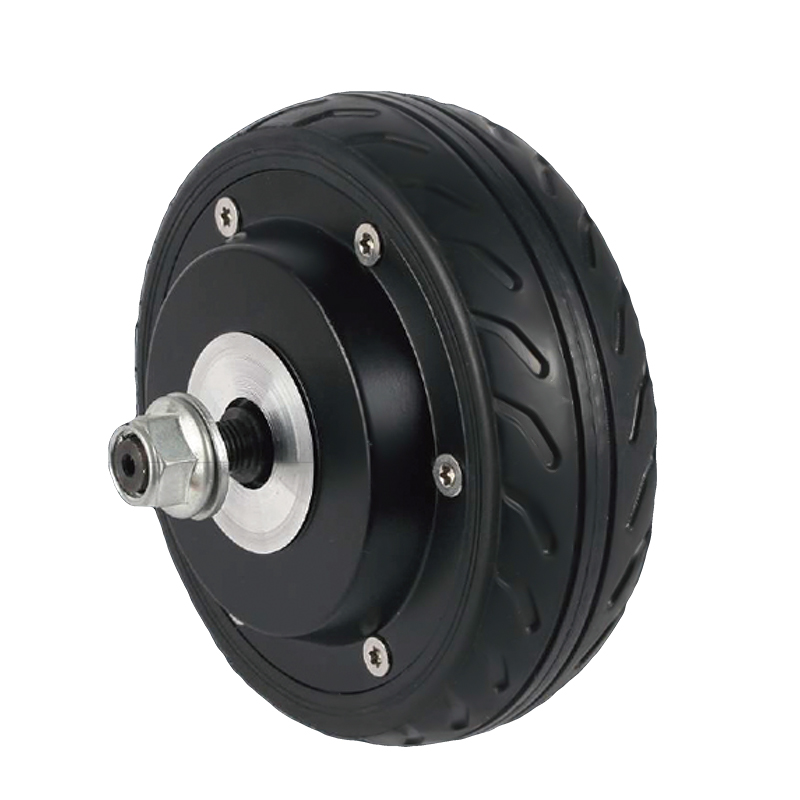
Integrated Servo Wheel Hub Drive
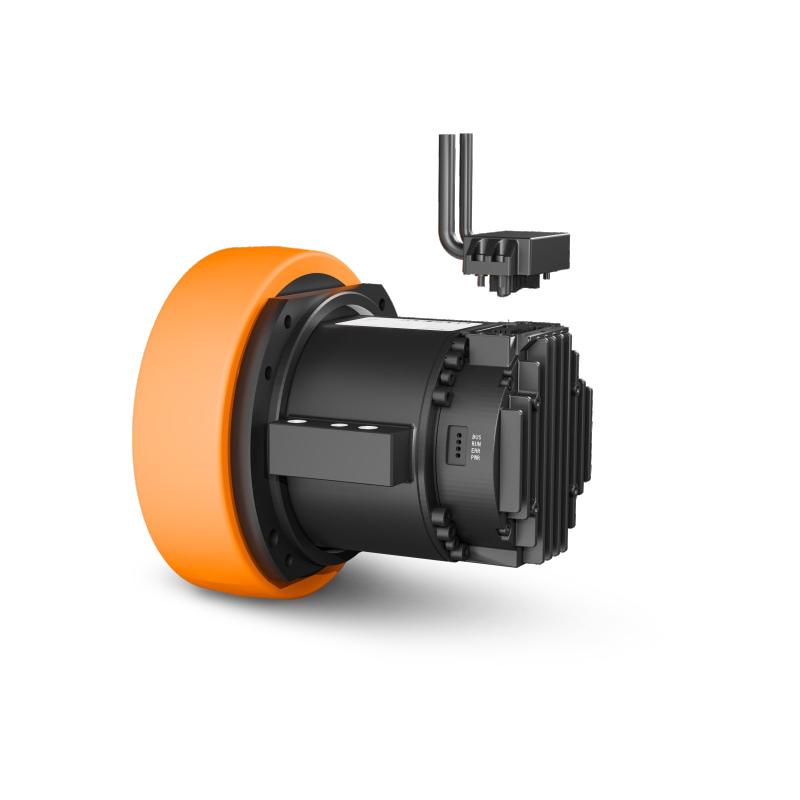
(Common-Body) Integrated Servo Wheel Module - K4C43
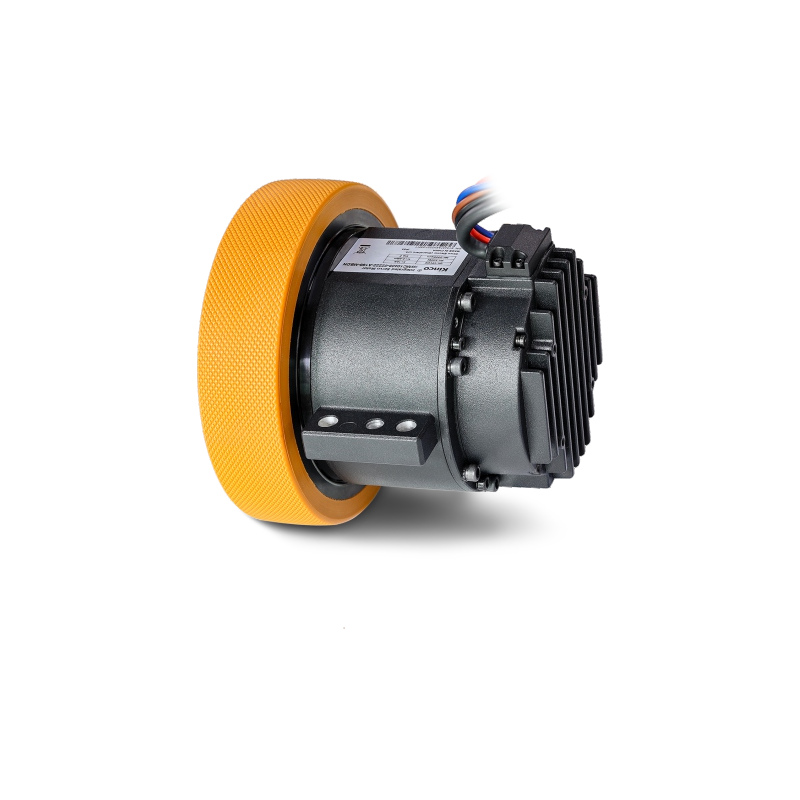
(STO) Integrated Servo Wheel Module
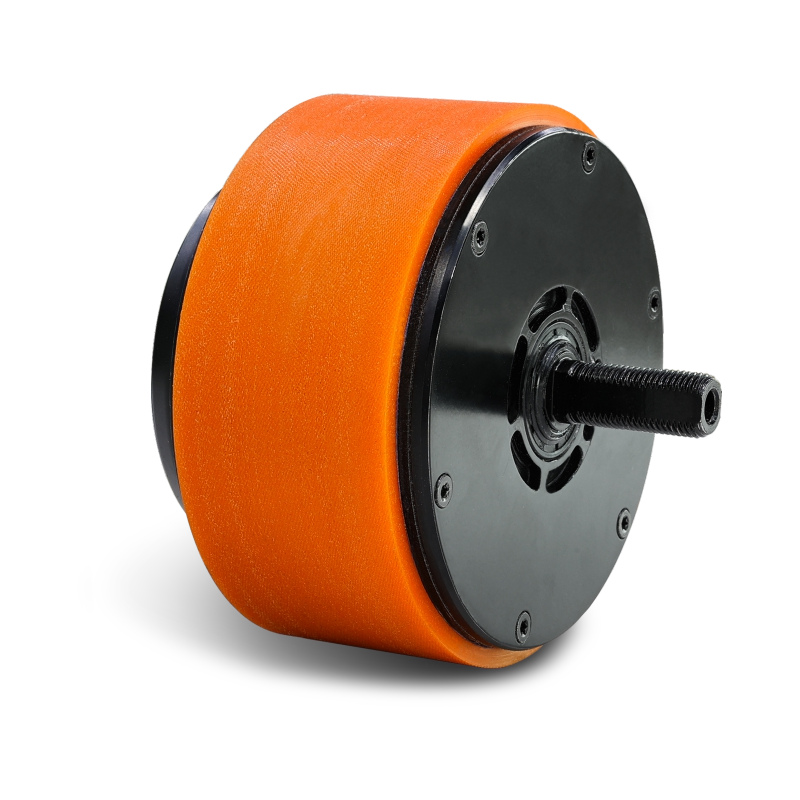
5.5-inch Integrated Servo Hub Motor
AGV Motor Selection for AGV and AMR Platforms
An AGV motor should be selected as part of the complete wheel-drive system rather than by motor power alone. Vehicle load, driven-wheel load, wheel diameter, required travel speed, acceleration, floor condition, duty cycle, voltage and control interface all affect the final drive configuration.
For compact AGV, AMR and service-robot platforms, an integrated servo hub motor can reduce installation space and external wiring by combining the servo drive and hub motor in one compact wheel unit. JY Robot's JY-IHM140-085-48-C integrated servo hub motor uses a Ø140 mm polyurethane wheel and provides 8.5 N·m rated torque, 25.5 N·m maximum torque and 1.54 m/s rated linear speed, with CANopen communication and IP65 protection.
Integrated Servo Hub Motor vs Geared AGV Drive Wheel
A hub-motor architecture is useful where compact packaging, reduced wiring and a small wheel envelope are priorities. For applications requiring higher wheel torque or higher permissible radial load, a geared integrated servo wheel can provide a different balance of torque, speed and mechanical capacity.
JY Robot also supplies common-body integrated servo wheel modules and STO integrated servo wheel modules for AGV and AMR drive systems. These products integrate the servo drive, motor, reduction gearbox and wheel into one module and are intended for applications that require higher wheel-end torque than the compact hub-motor architecture.
For a detailed comparison of torque, wheel load, voltage, speed, communication, STO and installation space, see our integrated servo wheel selection guide.
Key Inputs for AGV Motor Selection
- Vehicle and payload mass: use actual driven-wheel load rather than gross vehicle weight alone.
- Required tractive force: confirm rolling resistance, acceleration and gradient requirements.
- Wheel diameter: affects wheel-end force, motor speed, chassis height and floor-crossing ability.
- Target vehicle speed: check wheel speed together with reduction ratio and rated torque.
- Voltage: confirm battery or DC-bus voltage and logic-power requirements.
- Communication: define CANopen, RS485, encoder feedback and safety-interface requirements.
- Duty cycle: continuous travel and intermittent operation create different thermal loads.
- Installation envelope: check wheel diameter, module width, connector direction, cable space and service access.
Which AGV Motor Architecture Should You Evaluate?
For compact robots where installation space and wiring simplicity are the main constraints, start with an integrated servo hub motor. For higher wheel loads and higher torque, evaluate an integrated geared servo wheel. For heavy-duty mobile platforms where the complete chassis requires a twin-wheel drive structure, see our AGV drive wheels and drive modules.
For engineering selection support, provide the AGV or AMR self-weight, payload, number of driven wheels, expected load on each drive wheel, target speed, floor condition, maximum gradient, battery voltage, communication requirements and available installation space.
Need help choosing a configuration?
Share your platform load, target speed, installation space and control requirements. JY Robot can help narrow down the suitable product family and model.